
Sulawesi is one of Indonesia’s most fascinating islands, particularly for its extraordinary mountain landscapes and complex geological history. Located between Borneo, the Philippines, the Moluccas, and the islands of the Lesser Sunda region, Sulawesi has a distinctive geographical position that has influenced the formation of its mountains, valleys, limestone formations, and volcanic landscapes.
Unlike many other Indonesian islands dominated by long volcanic mountain chains, Sulawesi has a much more complicated geological structure. Its mountains were formed through a combination of tectonic plate movements, volcanic activity, uplift, erosion, and ancient geological processes that took place over millions of years.
These geological conditions have created a remarkable variety of landscapes, ranging from rugged volcanic peaks and steep mountain ridges to limestone karst formations, deep valleys, highland grasslands, and tropical mountain forests.
For hikers, geologists, researchers, and nature enthusiasts, the mountains of Sulawesi offer an extraordinary opportunity to explore some of Indonesia’s most distinctive natural environments.
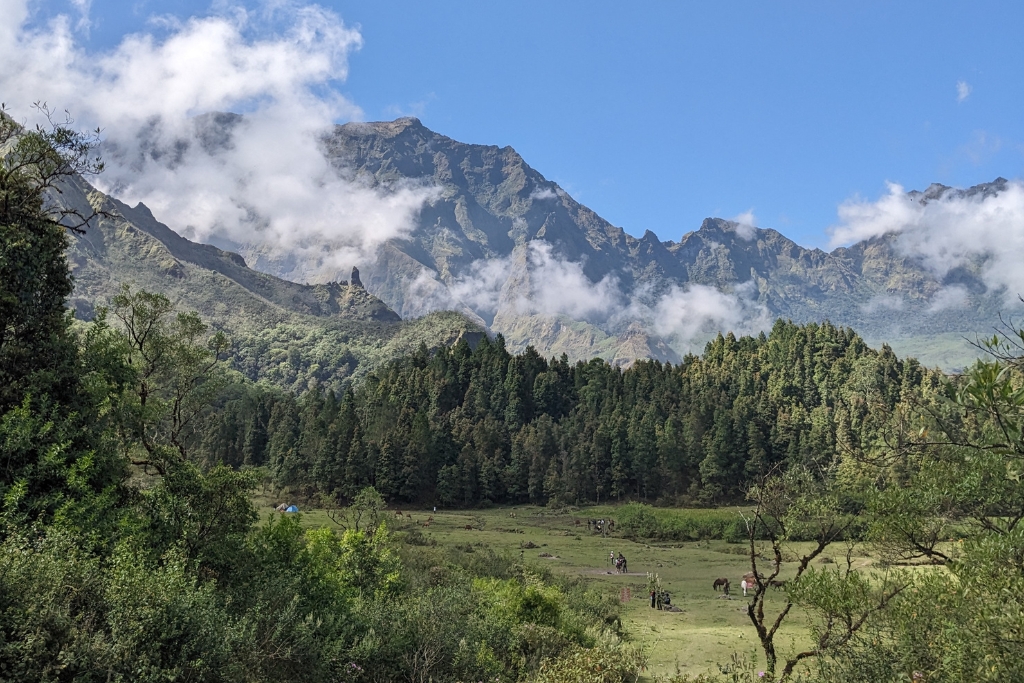
1. Sulawesi’s Complex Tectonic Setting
One of the most important factors behind the unique characteristics of Sulawesi’s mountains is its complex tectonic setting.
Sulawesi lies at the convergence of several major tectonic plates and smaller geological blocks, including the Eurasian, Australian, and Pacific-related plates. The interaction between these plates has produced complicated geological structures across the island.
Over millions of years, tectonic movements caused sections of the Earth’s crust to collide, fracture, rotate, and rise. These processes contributed to the formation of Sulawesi’s mountain ranges and highland regions.
The island is generally divided into several geological provinces, including the western volcanic belt, central metamorphic and ophiolitic regions, eastern sedimentary basins, and southeastern ultramafic complexes.
This geological diversity explains why mountains in different parts of Sulawesi can have very different appearances, rock compositions, elevations, and ecosystems.
2. Volcanic Mountains in Northern Sulawesi
Northern Sulawesi contains some of the island’s most recognizable volcanic landscapes. This region is influenced by active tectonic processes associated with the northern Sulawesi volcanic arc.
Mount Lokon, Mount Mahawu, Mount Soputan, and Mount Karangetang are examples of volcanic mountains in this part of the island.
Mount Lokon Tomohon North Sulawesi volcanic mountain, Mount Mahawu crater lake North Sulawesi, Mount Karangetang Siau active volcano aerial.
These mountains were shaped by volcanic eruptions, lava flows, volcanic ash deposits, and other processes associated with magma movement beneath the Earth’s surface.
Some volcanoes have well-defined craters, while others display steep volcanic cones and extensive deposits of volcanic materials.
The volcanic soils in these areas can support productive agricultural landscapes, particularly around the highlands of Tomohon and Minahasa.
However, volcanic activity also creates natural hazards, including ash emissions, lava flows, pyroclastic density currents, and volcanic earthquakes.
The combination of fertile volcanic land, dramatic mountain scenery, and geothermal activity makes northern Sulawesi geologically fascinating.
3. Mount Bawakaraeng and the Southern Sulawesi Highlands
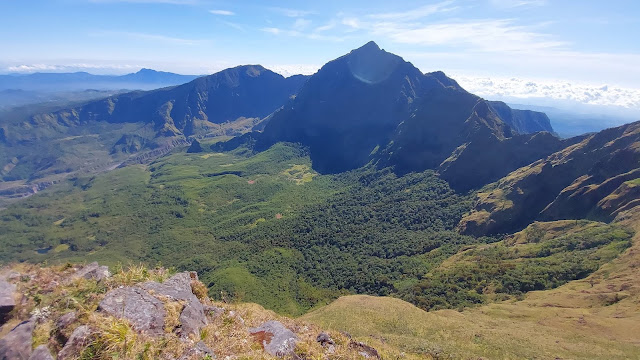
South Sulawesi has a different mountain character compared with the volcanic landscapes of the north.
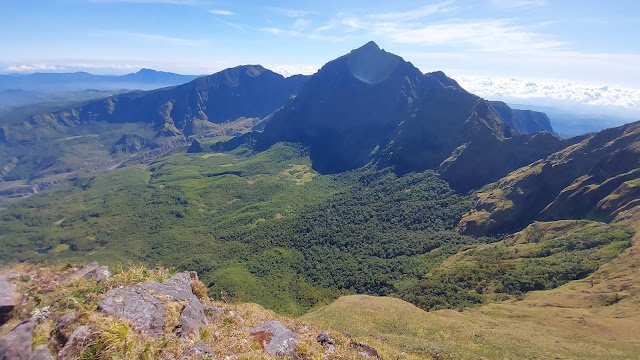
One of its most famous peaks is Mount Bawakaraeng, which reaches approximately 2,830 meters above sea level. Located in Gowa Regency, this mountain is a major destination for hikers and mountain climbers in South Sulawesi.
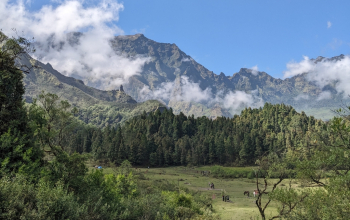
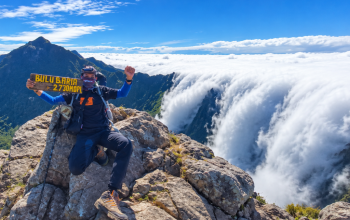
<AsyncImageGroup query={[“Mount Bawakaraeng South Sulawesi summit mountain landscape”,”Mount Bawakaraeng Lembanna hiking trail”,”Mount Bawakaraeng highland landscape clouds”]} aspectRatio=”5:4″/>
The mountain landscape is characterized by steep slopes, exposed ridges, deep valleys, forested sections, and high-altitude vegetation.
Its geological structure reflects the complex tectonic history of southwestern Sulawesi, where ancient rocks have been deformed, uplifted, and exposed through erosion.
Nearby mountain environments include Lembah Ramma and Lembah Lohe, which are known for their open grasslands, mountain streams, rocky slopes, and natural camping areas.
These valleys provide an interesting contrast to the surrounding rugged mountain terrain. Their landscapes demonstrate how erosion, water movement, and long-term weathering shape highland environments.
For hikers, the southern Sulawesi highlands offer a combination of challenging mountain trails, spectacular viewpoints, and relatively diverse ecosystems.
4. Limestone Karst Mountains: A Geological Masterpiece
One of Sulawesi’s most extraordinary geological features is its limestone karst landscape.
The Maros-Pangkep region in South Sulawesi contains one of the largest and most impressive tropical karst landscapes in the world.
<AsyncImageGroup query={[“Rammang Rammang Maros Pangkep limestone karst towers”,”Bantimurung Maros karst mountain landscape”,”Leang Leang prehistoric caves limestone karst South Sulawesi”]} aspectRatio=”5:4″ layout=”bento”/>
These dramatic limestone formations developed over geological time through the accumulation and transformation of carbonate materials, followed by uplift and extensive dissolution by rainwater.
Rainwater absorbs carbon dioxide from the atmosphere and soil, forming a weak carbonic acid that gradually dissolves limestone. Over thousands to millions of years, this process creates caves, underground drainage systems, cliffs, towers, and unusual rock formations.
The result is a landscape characterized by isolated limestone hills, narrow valleys, steep rock walls, and underground caves.
Rammang-Rammang is among the most recognizable examples of this geological environment. Its towering limestone formations rise above rivers, wetlands, forests, and traditional villages.
The region is also part of the UNESCO Global Geopark Maros-Pangkep, recognized for its outstanding geological, biological, and cultural heritage.
These karst mountains are not volcanic mountains. Their formation is primarily associated with sedimentary geology, tectonic uplift, and chemical weathering.
5. Ophiolite Rocks and Ancient Oceanic Crust
Another remarkable geological feature of Sulawesi is the presence of extensive ophiolite complexes.
Ophiolites are fragments of ancient oceanic lithosphere that have been tectonically emplaced onto continental or island crust.
They may contain ultramafic rocks such as peridotite, as well as serpentinite, gabbro, and associated geological formations.
Sulawesi contains some of the world’s significant ophiolite exposures, particularly in its eastern and southeastern regions.
These rocks provide evidence of ancient oceanic environments and the complicated tectonic processes that shaped the island.
Weathering of ultramafic rocks can also produce soils rich in iron, magnesium, and nickel. Such geological conditions have contributed to the development of important nickel deposits in parts of Sulawesi.
For geologists, these areas are valuable natural laboratories for understanding oceanic crust, mantle rocks, tectonic collisions, and mineral formation.
6. Mountain Valleys, Rivers, and Natural Erosion
The mountains of Sulawesi are not only characterized by their peaks but also by their extensive valleys and river systems.
Over long geological periods, flowing water has carved deep valleys through mountain slopes and fractured rock formations.
<AsyncImageGroup query={[“Lembah Ramma Gowa South Sulawesi mountain valley”,”Lembah Lohe Gowa mountain grassland landscape”,”Sulawesi highland mountain river tropical forest”]} aspectRatio=”5:4″/>
In South Sulawesi, places such as Lembah Ramma and Lembah Lohe demonstrate the relationship between mountain topography, drainage systems, and erosion.
Seasonal rainfall, steep terrain, and variations in rock resistance influence the development of streams, waterfalls, gullies, and valley floors.
These environments create habitats for different types of vegetation and wildlife.
They also provide attractive destinations for hiking, trekking, photography, and camping.
7. Different Mountain Ecosystems and Biodiversity
Sulawesi is part of Wallacea, a biogeographical region located between the Asian and Australian continental shelves.
Its unique geographical and geological history has contributed to the development of distinctive ecosystems and high levels of biodiversity.
Mountain environments in Sulawesi include tropical lowland forests, montane forests, mossy forests, grasslands, and rocky highland habitats.
As elevation increases, temperatures generally become cooler, vegetation changes, and environmental conditions become more challenging.
Some mountain regions support endemic species that are not naturally found anywhere else in the world.
The island is also home to distinctive wildlife, including the Sulawesi macaque, anoa, babirusa, and numerous endemic bird species.
The conservation of mountain forests is essential because these ecosystems help regulate water supplies, protect soil, store carbon, and provide habitats for wildlife.
8. Why Sulawesi’s Mountains Are Different from Java and Sumatra
Compared with Java and Sumatra, where extensive volcanic mountain chains dominate the landscape, Sulawesi presents a more varied geological structure.
Java and Sumatra are strongly influenced by subduction-related volcanism along the Sunda Arc.
Sulawesi, on the other hand, contains a mixture of volcanic arcs, uplifted sedimentary rocks, metamorphic complexes, ophiolites, and limestone karst formations.
This diversity means that not every mountain in Sulawesi is a volcano.
Some mountains are associated with ancient tectonic collisions, while others consist of uplifted sedimentary rocks or volcanic materials.
This geological variety is one of the main reasons why Sulawesi offers such diverse mountain scenery and natural attractions.
9. The Best Experiences for Mountain Lovers
Exploring Sulawesi’s mountains offers much more than reaching a summit.
Visitors can experience different landscapes and geological environments through hiking, camping, nature photography, and geological exploration.
Mount Bawakaraeng is an attractive destination for experienced hikers seeking a challenging high-altitude adventure.
Lembah Ramma and Lembah Lohe offer beautiful mountain valley scenery, grasslands, streams, and camping opportunities.
The Maros-Pangkep karst region provides a different experience, with limestone towers, prehistoric caves, rivers, and traditional villages.
Northern Sulawesi offers volcanic landscapes, crater environments, and spectacular highland scenery.
Each destination reveals a different chapter of Sulawesi’s geological history.
Conclusion
The mountains of Sulawesi represent an extraordinary combination of geological processes, natural landscapes, and ecological diversity.
Their formation is closely connected to millions of years of tectonic movements, volcanic activity, sedimentation, uplift, and erosion.
From the active volcanoes of northern Sulawesi to the rugged highlands of South Sulawesi, and from the ancient ophiolite complexes of eastern Sulawesi to the spectacular limestone karst formations of Maros-Pangkep, the island offers an exceptional variety of mountain environments.
For hikers, scientists, and nature enthusiasts, Sulawesi is more than a destination for mountain climbing. It is a living geological landscape where the Earth’s history can be explored through its rocks, valleys, forests, and peaks.
Discover Sulawesi with Sulawesi Hike – Higher Trails, Bigger Horizons.

Maybe you are interested in reading the following article:
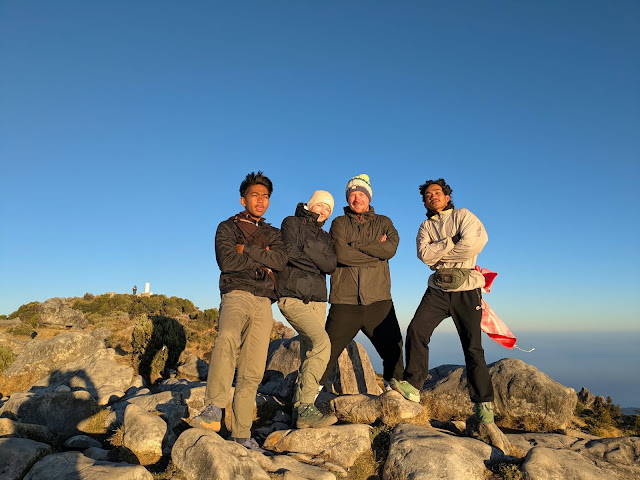
Private Mount Bawakaraeng Hiking Tour from Makassar: Trek with a Trusted Local Guide
Are you looking for an unforgettable mountain adventure in South Sulawesi? The Private Mount Bawakaraeng Hiking Tour from Makassar is an excellent choice for travelers who want to explore one of the region’s remarkable mountain destinations with the support of a trusted local guide. Whether you are traveling as a couple, with a group of... read more
Mount Bawakaraeng Hiking Guide: How to Choose the Right Local Guide
Mount Bawakaraeng, rising to approximately 2,830 meters above sea level, is one of the most exciting hiking destinations in South Sulawesi, Indonesia. Located in the highlands of Gowa Regency, the mountain attracts local hikers, adventure travelers, photographers, and international visitors looking for a challenging but rewarding mountain experience. For fir... read more
The Unique Characteristics and Geological Conditions of Mountains in Sulawesi, Indonesia
Sulawesi is one of Indonesia’s most fascinating islands, particularly for its extraordinary mountain landscapes and complex geological history. Located between Borneo, the Philippines, the Moluccas, and the islands of the Lesser Sunda region, Sulawesi has a distinctive geographical position that has influenced the formation of its mountains, valleys, l... read more

Contact Us
If you have any questions, please contact us.
-
Hotline
+62881080121080 -
Whatsapp
+62881080121080 -
Email
amiruddinemail@gmail.com


No comment yet